ꕙꔤ
Vai
Niger-Congo (Mande, Western, Vai-Kono)
Vai (Vai: ꕙꔤ) is a Western Mande (Niger-Congo) language spoken by roughly 104,000–120,000 people in Liberia and Sierra Leone. It is written with the Vai syllabary, one of the earliest and most successful of the some two dozen indigenous West African scripts created in the 19th and 20th centuries (alongside Bamum, Nʼko, Mende Kikakui and Bassa Vah); older African scripts such as Geʽez and Tifinagh predate it and remain in use. The syllabary was devised around 1832–33 by Mɔmɔlu Duwalu Bukɛlɛ — reportedly after a dream — with associates, amid heavy Atlantic trade contact but outside European colonial rule (Liberia being a settlement of freed African Americans, independent from 1847). Many scholars attribute it to stimulus diffusion — the idea of writing prompted by exposure to Latin, Arabic and perhaps Cherokee — though its signs are largely original. The Vai sit at the Mande–Atlantic contact zone; the script was encoded in Unicode 5.1 (2008, U+A500–A63F).
Where it is spoken
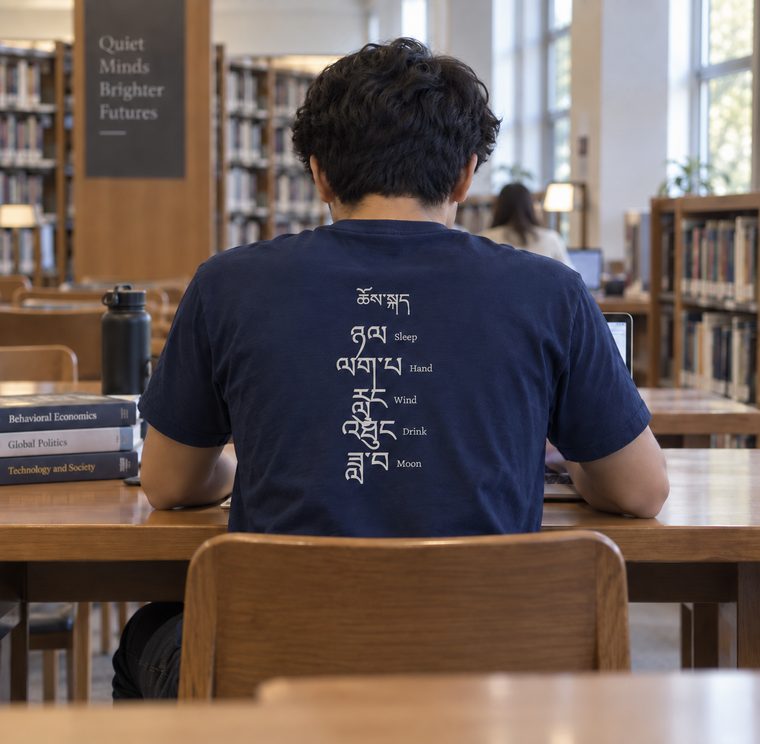
👕 The words of this language can also go on a T-shirt (below)
66 core words in Vai
Sources
Words compared
Compared with languages in the same classification: Niger-Congo
| Meaning | Vai | Eastern Maninka | Kita Maninkakan | Xaasongaxango | Dyula | Bambara | Western Maninkakan |
|---|---|---|---|---|---|---|---|
| Water | ꕀ /dʒi/ | ji /dʒi/ | ji /dʒi/ | ji /dʒi/ | ji /dʒi/ | ji /dʒi/ | jiyo /dʒijo/ |
| Fire | ꕚ /ta/ | ta /ta/ | ta /ta/ | ta /ta/ | tasuma /tasuma/ | tasuma /tasuma/ | ta /ta/ |
| Sun | ꔎꔒ /tele/ | tele /tele/ | tili /tili/ | tili /tili/ | tile /tile/ | tile /tile/ | tilo /tilo/ |
| Moon | ꕪꖃ /kalo/ | karo /kaɾo/ | kalo /kalo/ | kalo /kalo/ | kalo /kalo/ | kalo /kalo/ | xaro /xaɾo/ |
| Star | ꕿꕱꕮ /toːma/ | lolo /lolo/ | lolo /lolo/ | lolo /lolo/ | lolo /lolo/ | dolo /dòlo/ | loolo /loːlo/ |
| Rain | ꖇꕯ /suna/ | sanji /sandʒi/ | sanji /sandʒi/ | — | sanji /sandʒi/ | sanji /sándʒi/ | sanjiyo /sandʒijo/ |
| Wind | ꔱꕩ /fija/ | fɔɲɔ /fɔɲɔ/ | fɔɲɔ /fɔɲɔ/ | — | fɔɲɔ /fɔɲɔ/ | fiɲɛ /fiɲɛ/ | hoɲo /hoɲo/ |
| Stone | ꔖꘋ /seŋ/ | kaba /kaba/ | — | bere /beɾe/ | kabakuru /kabakuru/ | kaba /kaba/ | kuro /kuɾo/ |
| Mountain | ꗛꖻ /kɔɔ̃/ | kɔnkɛ /kɔŋkɛ/ | — | kuru /kuɾu/ | kulu /kulu/ | kulu /kulu/ | kuro /kuɾo/ |
| Sea | ꗛꔤ /kɔi/ | kɔɔji /kɔːdʒi/ | — | — | kɔgɔji /kɔɡɔdʒi/ | kɔgɔji /kɔɡɔdʒi/ | xooxojiyo /xoːxodʒijo/ |
| Night | ꔷꔱ /lifi/ | su /su/ | su /su/ | su /su/ | su /su/ | su /su/ | suwo /suwo/ |
| Yesterday | ꖴꖸ /kunu/ | — | — | — | kunun /kunun/ | kunun /kunũ/ | kunun /kunũ/ |
| Tomorrow | ꔻꕯ /sina/ | sinin /sinin/ | — | — | sini /sini/ | sini /sini/ | sinin /sinĩ/ |
| Monday | ꗳꗡꘉ /tɛːnɛ/ | — | — | — | Tɛnɛlon /tɛnɛlon/ | ntɛnɛn /ntɛ̀nɛn/ | — |
| I | ꘋ /ŋ̀/ | ne /ne/ | ne /ne/ | ne /ne/ | n /ŋ́/ | ne /nê/ | nte /n̩te/ |
| You | ꔤ /ì/ | i /i/ | i /i/ | i /i/ | i /í/ | i /í/ | ite /ite/ |
| We | ꖷ /mù/ | an /an/ | an /án/ | an /an/ | an /án/ | an /án/ | ilan / ntelu /ilã / n̩telu/ |
| Person | ꗞ /mɔ/ | mɔɔ /mɔː/ | — | — | mɔgɔ /mɔ̀ɡɔ/ | mɔgɔ /mɔ̀ɡɔ/ | moxo /moxo/ |
| Mother | ꕒ /ɓa/ | ba /ba/ | ba /ba/ | ba /ba/ | ba /ba/ | ba /ba/ | na /na/ |
| Father | ꕘ /fa/ | fa /fa/ | fa /fa/ | fa /fa/ | fa /fa/ | fa /fa/ | ha /ha/ |
| Daughter | ꔔꘋ ꖷꖬꕮ /deŋ musuma/ | denmuso /dɛnmuso/ | — | — | denmuso /denmuso/ | denmuso /dɛnmuso/ | dinmuso /dinmuso/ |
| Name | ꕿꘌ /toː/ | tɔɔ /tɔː/ | tɔɔ /tɔː/ | toxo /toxo/ | tɔgɔ /tɔ́ɡɔ/ | tɔgɔ /tɔ́ɡɔ/ | toxo /toxo/ |
| Head | ꖴꘋ /kuŋ/ | kun /kũ/ | — | — | kunkolo /kunkolo/ | kun /kun/ | kunŋo /kũŋo/ |
| Eye | ꕧ /dʒa/ | ɲa /ɲa/ | ña /ɲa/ | ɲa /ɲa/ | ɲɛ /ɲɛ/ | ɲɛ /ɲɛ/ | ɲa /ɲa/ |
| Ear | ꕿꖃ /tolo/ | tolo /tolo/ | tulu /tulu/ | tulu /tulu/ | tulo /tulo/ | tulo /tulo/ | tulo /tulo/ |
| Mouth | ꕞ /la/ | da /da/ | — | da /da/ | da /da/ | da /da/ | da /da/ |
| Tooth | ꕈꘋ /ɲiŋ/ | ɲin /ɲĩ/ | ɲin /ɲĩ/ | ɲin /ɲĩ/ | ɲin /ɲĩ/ | ɲin /ɲĩ/ | ɲinŋo /ɲĩŋo/ |
| Tongue | ꘉꗢ /nɛ/ | nɛn /nɛn/ | nɛn /nɛn/ | nɛn /nɛn/ | nɛn /nɛn/ | nɛn /nɛn/ | nenŋo /nẽŋo/ |
| Hand | ꕸꖃ /ɓolo/ | bolo /bolo/ | bulu /bulu/ | bulu /bulu/ | bolo /bolo/ | bolo /bolo/ | bulo /bulo/ |
| Foot | ꔞꘋ /keŋ/ | sen /sen/ | — | sin /sin/ | sen /sen/ | sen /sèn/ | sinŋo /sĩŋo/ |
| Heart | ꔰ /ɡbiː/ | jusu /dʒusu/ | dusu /dusu/ | dusu /dusu/ | dusu /dusu/ | dusu /dusu/ | jusukunŋo /dʒusukũŋo/ |
| Bone | ꖴꖕ /kuu/ | kolo /kolo/ | kulu /kulu/ | xulu /xulu/ | kolo /kolo/ | kolo /kolo/ | xulo /xulo/ |
| Blood | ꕴꔤ /woi/ | jeli /dʒeli/ | joli /dʒoli/ | jelu /dʒelu/ | joli /dʒoli/ | joli /dʒoli/ | jelo /dʒelo/ |
| Love | ꔷꕩ /lija/ | kanin /kanĩ/ | kanu /kanu/ | kanu /kanu/ | kanu /kanu/ | kanu /kanu/ | kanu /kanu/ |
| Tree | ꗛꘋ /kɔŋ/ | yiri /jiɾi/ | yiri /jiɾi/ | yiri /jiɾi/ | yiri /jiri/ | jiri /dʒiri/ | yiro /jiɾo/ |
| Dog | ꖙꖨ /wulu/ | wulu /wulu/ | wulu /wulu/ | wulu /wulu/ | wulu /wulu/ | wulu /wulu/ | wulo /wulo/ |
| Cat | ꕮꕰꔒ /maɲale/ | ɲaari /ɲaːɾi/ | ñaakuma /ɲaːkuma/ | jakuma /dʒakuma/ | jakuma /dʒakuma/ | jakuma /dʒakuma/ | ɲaaro /ɲaːɾo/ |
| Horse | ꖇ /so/ | so /so/ | — | — | so /so/ | so /so/ | suwo /suwo/ |
| Bird | ꖏꔕ /konde/ | kɔnɔ /kɔnɔ/ | kɔnɔ /kɔnɔ/ | — | kɔnɔ /kɔnɔ/ | kɔnɔ /kɔnɔ/ | xono /xono/ |
| Egg | ꔞꔤ /kei/ | kili /kili/ | — | — | sisɛfan /sisɛfã/ | shɛfan /ʃɛfã/ | kilo /kilo/ |
| Fish | ꕈꘊ /ɲiɲɛ/ | jɛɛ /dʒɛː/ | yɛgɛ /jɛɡɛ/ | ɲege /ɲeɡe/ | jɛgɛ /dʒɛɡɛ/ | jɛgɛ /dʒɛɡɛ/ | yego /jeɡo/ |
| House | ꔞꘋ /keŋ/ | bon /bon/ | so /so/ | so /so/ | so /so/ | so /so/ | bunŋo /bũŋo/ |
| Milk | ꖬꖬ /susu/ | nɔnɔ /nɔnɔ/ | nɔnɔ /nɔnɔ/ | nɔnɔ /nɔnɔ/ | nɔnɔ /nɔnɔ/ | nɔnɔ /nɔnɔ/ | nono /nono/ |
| Honey | ꖴꖷ /kumu/ | li /li/ | — | — | li /li/ | di /di/ | liyo /lijo/ |
| Salt | ꖏ /ko/ | kɔɔ /kɔː/ | kɔgɔ /kɔɡɔ/ | kɔgɔ /kɔɡɔ/ | kɔgɔ /kɔɡɔ/ | kɔgɔ /kɔɡɔ/ | xooxo /xoːxo/ |
| Wine | ꔠꔪ ꗬ /ɡepi kpɛ/ | — | ɛrɛsɛnji /ɛɾɛsɛndʒi/ | — | divɛn /divɛ̃/ | diwɛn /diwɛn/ | eresendolo /eɾesendolo/ |
| Iron | ꖴꖫ /kundu/ | nɛɛ /nɛː/ | neke /neke/ | nege /neɡe/ | nɛgɛ /nɛɡɛ/ | nɛgɛ /nɛɡɛ/ | nego /neɡo/ |
| Book | ꕺꖃ /kpolo/ | gbafe /ɡbafe/ | — | — | gafe /ɡafe/ | gafe /ɡafe/ | kitaabo /kitaːbo/ |
| Eat | ꗏꘋ /lɔŋ/ | domun /domũ/ | don /don/ | domu /domu/ | dun /dun/ | dun /dũ/ | domo /domo/ |
| Drink | ꕆ /mi/ | min /min/ | min /min/ | min /min/ | min /min/ | min /min/ | min /mĩ/ |
| Sleep | ꕃ /ki/ | sunɔɔ /sunɔː/ | — | — | sunɔgɔ /sunɔɡɔ/ | sunɔgɔ /sunɔɡɔ/ | sinnoxo /sinːoxo/ |
| One | ꗏꗒ /lɔndɔ/ | kelen /kelen/ | kilin /kilin/ | kilin /kilin/ | kelen /kelen/ | kelen /kelen/ | kilin /kilĩ/ |
| Two | ꗱꕞ /fɛla/ | fila /fila/ | hula /hula/ | fula /fula/ | fila /fìla/ | fila /fìla/ | hula /hula/ |
| Three | ꕢꕔ /sakpa/ | saba /saba/ | saba /saba/ | saba /saba/ | saba /saba/ | saba /saba/ | saba /saba/ |
| Four | ꕯꕊꕇ /naːni/ | naani /naːni/ | naani /naːni/ | naani /naːni/ | naani /naːni/ | naani /naːni/ | naani /naːni/ |
| Five | ꖇꕱꖨ /soːlu/ | loolu /loːlu/ | loolu /lóːlu/ | luulu /luːlu/ | duuru /dúːru/ | duuru /duːru/ | luulu /luːlu/ |
| Hundred | ꖽꗒ /hɔndɔ/ | kɛmɛ /kɛmɛ/ | — | keme /keme/ | kɛmɛ /kɛ̀mɛ́/ | kɛmɛ /kɛmɛ/ | keme /keme/ |
| Hello | ꘋꕯ ꖬꕎ ꘃꗡ ꗪ ꔤ ꕮ /ŋna suwa kɛɛ ɓɛ i ma/ | i ni se /i ni se/ | i ni soɣoma /i ni soɣoma/ | i ni sogoma /i ni soɡoma/ | i ni sɔgɔma /i ni sɔɡɔma/ | i ni ce /i ni tʃɛ/ | — |
| Thank you | ꔤ ꕒꔤꕪ /i ɓaika/ | i ni ce /i ni tʃe/ | i ni baara /i ni baːɾa/ | i ni baara /i ni baːɾa/ | i ni ce /i ni tʃe/ | i ni ce /i ni tʃɛ/ | — |
| Good | ꕈ /ɲi/ | ka ɲi /ka ɲi/ | ñuman /ɲuman/ | nyi /ɲi/ | ɲuman /ɲuman/ | ka ɲi /ka ɲi/ | ɲima /ɲima/ |
| New | ꕯꕮ /nama/ | kuda /kuda/ | — | kuta /kuta/ | kura /kura/ | kura /kura/ | kuto /kuto/ |
| Black | ꔱꘋ /fiŋ/ | fin /fin/ | — | — | fin /fin/ | fin /fin/ | — |
| White | ꗬ /kpɛ/ | gbɛ /ɡbɛ/ | — | — | gwɛ /ɡwɛ/ | jɛ /dʒɛ/ | xoyi /xoji/ |
| Red | ꕧꕌꔒ /dʒale/ | wulen /wulen/ | bilen /bilen/ | wuleŋ /wuleŋ/ | bilen /bilen/ | bilen /bilen/ | wulen /wulẽ/ |
| Blue | dsiron /dʒiron/ | — | — | — | bulaman /bulaman/ | bulaman /bulaman/ | — |
| Greece | ꗤꗷꘋ /hɛlɛŋ/ | — | — | — | Gɛrɛsi /ɡɛrɛsi/ | Gɛrɛsi /ɡɛrɛsi/ | — |
Open the interactive map: Word Map · Han Map · Name Map · Time Map · Word Order · Tree
Part of LangMap — a linguistic visualization project. This is a static, crawlable summary; the interactive maps offer pronunciation audio, filters, and a globe view.
Made by Heuron Inc. · GitHub · cho@heuron.com · LangMap home